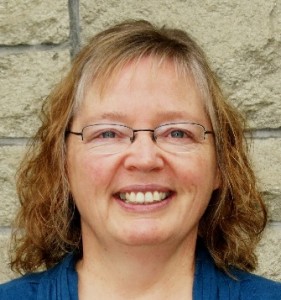
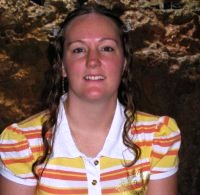
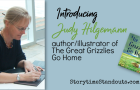
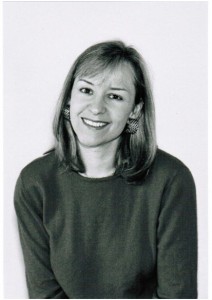
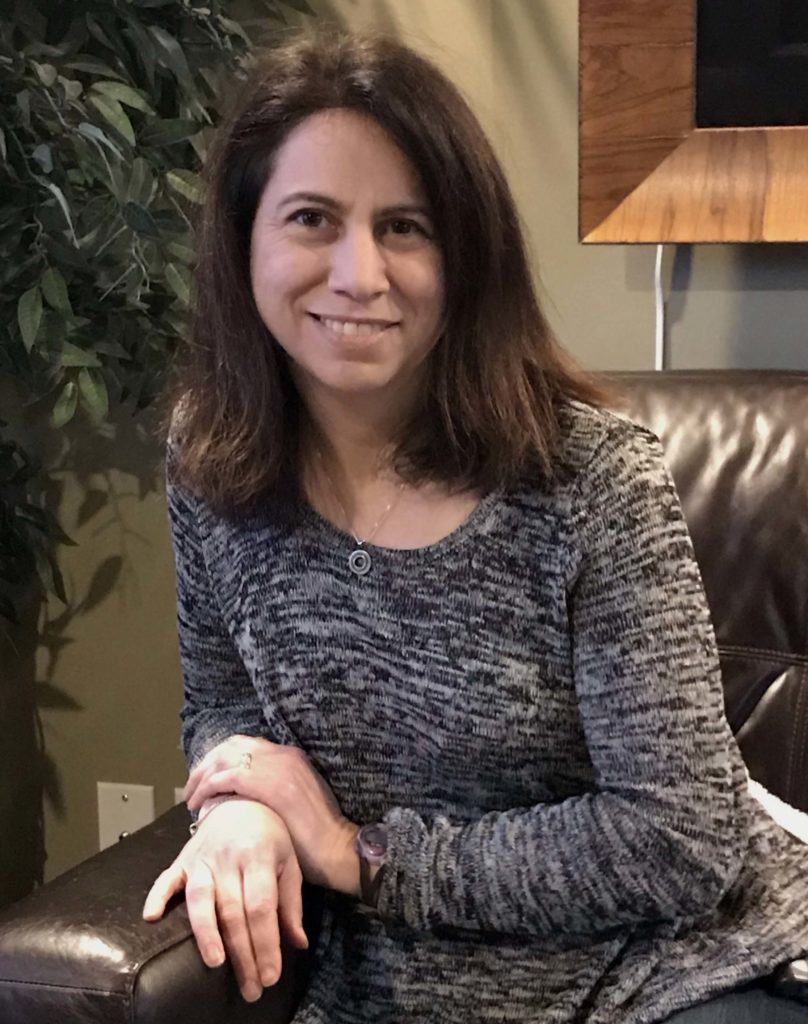
 Elizabeth MacLeod is one nosy author, which is why she loves writing non-fiction. She’s very curious about why people do what they do, and she likes sharing with kids the amazing facts and secrets she uncovers.

As a kid in Thornhill, Ontario, the idea of being a writer never crossed her mind — she figured most authors were already dead and they definitely weren’t Canadian. Besides, it was science that interested her.
But writing was already part of her life. After dinner on school nights, she and her two brothers would trudge up to their rooms, close their doors and start to do their homework — or so their parents thought. A few minutes later, a piece of paper would come sliding under her door. One of her brothers had drawn a picture, usually of some weird creature.
She really couldn’t draw (she still can’t!), so the only way she could respond was to write a short story, often about a mad scientist or space alien. she’d slip the story under her brother’s door and — well, not a lot of homework got done.
At university, she studied sciences — there was hardly any writing involved at all. After she graduated she had a number of jobs, but none of them had anything to do with writing. She wanted to be an author but she was too scared to admit it to anyone, especially herself. However, one day she gathered up her courage, phoned a newspaper and sold an article she’d written. Wow!
Soon after this she attended a publishing workshop in Banff, Alberta, which led her to a job as an editor at OWL magazine. After a few years she switched to book publishing and became an editor at Kids Can Press. Meanwhile, in her spare time she began writing non-fiction books for kids. Then she became a part-time editor and writer. Now she’s a full-time writer, working for a number of different publishers.
One of the things she especially likes about writing for kids is that she gets to investigate so many interesting topics. She’s written articles or books on subjects such as weird breeds of dogs, Marie Curie, hoaxes, the northern lights and many, many more. Did you know that some dinosaurs were as small as chickens? Or that Alexander Graham Bell, the inventor of the telephone, got tired of having his work interrupted by his invention?
She’s written many biographies about such people as Helen Keller, Albert Einstein and Samuel de Champlain. One of her favourite things is discovering how inventors and writers come up with their ideas. She’s written a series of biographies for readers ages 6 to 8, and one for kids aged 8 to 12.
More recently she’s written about royalty, and the mysteries and crimes that surround them. Monarchy has always fascinated her. She loves going behind the scenes with monarchs from Cleopatra to Dracula to find out just what they would do to hold onto power or protect their families. These books have also let her research forensic techniques, ranging from DNA testing to crime-scene procedures.
 Tell us about your latest published children’s book. Who do you think should read it? What are you most proud of?
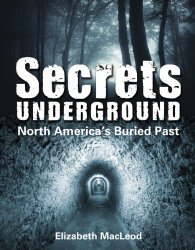
Secrets Underground: North America’s Buried Past is for readers age 10 and up. This is a great book for anyone who likes spine-tingling mysteries and eerie surprises! I think kids will be amazed to read about these buried secrets, including the top-secret equipment that lies deep below Grand Central Terminal in New York City and the network of abandoned tunnels below Moose Jaw, Saskatchewan.
The book also tells about the ships that were abandoned in San Francisco harbor during the Gold Rush. I travelled to the city and found numerous plaques and displays about the forgotten, buried ships. Many people who lived in San Francisco knew nothing about the ships but I’m proud of the fact that I was able to track them down.
Secrets Underground: North America’s Buried Past at Amazon,com
Secrets Underground: North America’s Buried Past at Amazon.ca
Was it difficult for you to get your first book published? What suggestions/words of encouragement do you have for aspiring authors/illustrators?
I’ve had a different writing career from most other writers. I started as an editor at OWL Magazine, so I was on the inside of the publishing world from the beginning. The first few books I published were books that publishers asked me to write.
It can be really tough to get a publisher to accept a book proposal so I’d suggest aspiring authors prepare themselves as much as possible. Colleges and universities offer great writing courses, and so do organizations such as CANSCAIP and SCBWI. These are wonderful opportunities to meet other writers, have your proposal assessed by an expert and improve your writing.
I think it’s important for all authors, aspiring and published, to remember to never give up. If you really believe in a book idea but a publisher turns it down, revise the proposal as necessary, then send it out to another publisher. From being on the inside of the publishing world, I know there are lots of reasons why one publisher will turn down a book idea that will work very well for another publisher.
If we were watching over your shoulder as you work on a book, what would we see? Where do you work? What does your writing / illustrating process look like?
I work at a large desk with a keyboard and good-sized computer monitor. I’ve got piles of papers and books, as well as a ceramic vase full of pens, a pewter pot holding paper clips, a grapefruit-scented candle (I read somewhere it helps with creativity) and a few other bits and pieces.
But you probably wouldn’t notice any of these things because you’d likely be focusing on our cat Cosimo. While I work, he’s usually stretched out under my desk lamp. Even on the hottest summer day, he seems to like the warmth!
Tell us about your experiences sharing your book with children. Has anything unusual / endearing / funny / unexpected happened?
In my presentations, I ask a lot of questions, so you’d think I’d be used to receiving some amazing answers, but kids always surprise me. I was talking once about the biographies I’ve written and telling kids about magician Harry Houdini. One boy shot up his hand and offered to share a magic trick with the group. How could I say no?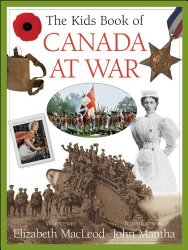
I also wrote The Kids Book of Canada at War, so I talk to students about John McCrae (author of the poem In Flanders Fields) and other brave Canadians who served in World War I and II (including my dad). I often get teary-eyed when I think of their courage and kids usually notice this. I wish I weren’t quite so emotional, but then the kids always want to share their stories about relatives who served in wartime. I guess I help them form a connection that makes them proud.
How do you stay connected with your readers? Have you gone on book tours? Do you engage on social media or through a website? Do you visit classrooms, libraries or bookstores?
I’ve taken part in a number of book tours, in British Columbia, Alberta, Manitoba, Ontario and throughout the Maritimes. I write about such interesting people and topics, so I love sharing the incredible facts I’ve uncovered. I visit classrooms, libraries and bookstores and have also done interviews on radio and television.
If you could dine with any author/illustrator (alive or dead), who would you choose and why?
I’d choose Lucy Maud Montgomery, author of the Anne of Green Gables books. I still re-read those books and I’ve written two biographies about her. Maud (as she liked to be called) had a tough life, so I’d ask her where she found her inspiration. I’d also like to know if she’s surprised that Anne is still so popular, what Maud thinks of all the books written about her and how she feels about Anne’s incredible fame in Japan.
Do you do school or library presentations? If so, please briefly describe topics/ geographical limitations.
I’ve written a series of biographies for first readers as well as a series for 8 to 12 year olds . So I can bring some of the world’s most incredible people to life for kids of many different ages. Kids are drawn into the wonderful stories about these well-known personalities with the many photos and artifacts that I use to illustrate my talks. I ask questions, request opinions, involve students in activities, etc.
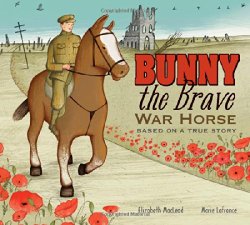 For students up to grade 2 or 3, I can also speak about my latest picture book, Bunny the Brave War Horse (Kids Can Press). This is a World War I story and is based on a real horse and rider. I can talk about the war as well as about horses; I also discuss World War II and show artifacts that belong to my father, who was a navigator with Bomber Command in the Royal Canadian Air Force.
As well, for older students I can look at the mysteries of history and how we’ve used modern technology to solve many of them. Using images and artifacts from my books Secrets Underground, Bones Never Lie and Royal Murder, I look at historic events and show why they matter, how they affect us today and how we can learn more about them. I also explore the forensic techniques used to solve crimes and mysteries and encourage kids to consider how to use deductive reasoning and other investigative methods in their own lives.
I’ve worked as an in-house editor, so as part of my presentation, I can also talk about the publishing process, from initial idea to final book. I discuss the team of people needed to produce a book, and again show artifacts to illustrate the various steps and to involve the audience.
As well, I have given many presentations to adults. One of my most popular talks is about how to get your children’s book published, including writing the best query letters, avoiding first-timers’ mistakes, etc. Since I have worked as an in-house editor, I can provide the view point of both an insider and a freelancer. I’ve also given presentations to many teachers and librarians about why biographies are important (for instance, they’re fun, they make history come alive, they can boost self-esteem and more) and how to interest children in biographies. I can provide handouts to participants for both of these talks.
I live in Toronto and I’m very willing to discuss travelling with anyone who would like me to speak in their classroom or library.


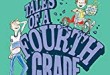
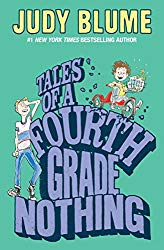 Tales of a Fourth Grade Nothing by
 . It ranks forty-fourth on the list. First published in 1972, Tales of a Fourth Grade Nothing is the first in a series that features brothers Peter and Farley. Nobody calls Farley by his legal name, he is known simply as Fudge. Fudge is 2 1/2 years old and is a constant source of annoyance for Peter. He goes into Peter’s bedroom and destroys a school project, he causes trouble at mealtime, he refuses to do what he is told. Peter is regularly asked to help adults “manage” Fudge and his antics.
 An easy read, and well-suited to readers at about a grade 3 or 4 level, I recommend this story of coping with a younger sibling as a fun read-aloud or a good introduction to the Fudge series for an independent reader.
 is a fun adventure through a dried-out, rule-bound land. The lead character, Walter Plume, is the wittiest, most imaginative, and just plain real kid you will ever meet. He is an eleven year old foodie, with taste buds that like both cranberry-glazed salmon and a plain ol’ corn dog. I know kids (and probably a lot of adults, too) will relate to Walter and his desire to use his imagination. (Middle grade novel, 7-12 years) Over the years, I have battled people and situations determined to dehydrate my imagination. But, I’m fully re-hydrated now!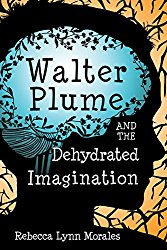


 (Taylor Swift),
  (Maroon 5) and
  (The Fray). We listened only to the beginnings (about 30 seconds) and the discussions that unfolded based on what the students heard in that time were excellent. They had theories and reasons for those theories that were mature and insightful. The best discussion came from How to Save a Life. Very powerful.