
Earth Day, Environment
A wonderful selection of Earth Day teaching resources including picture books that promote environmental awareness
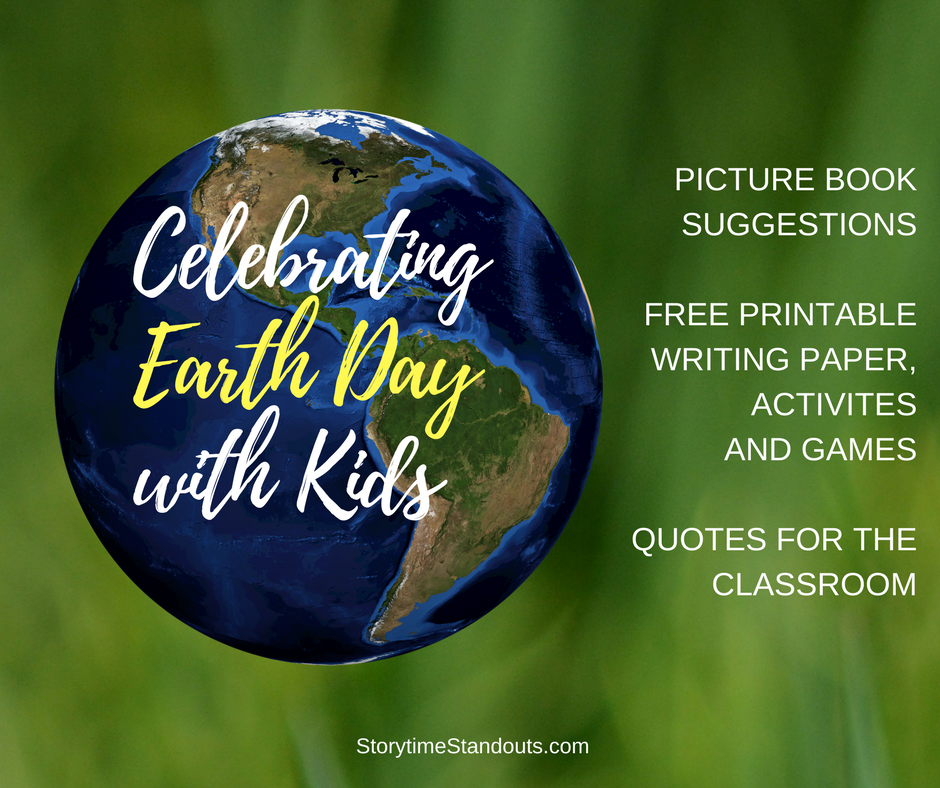
Green-theme picture books deliver important messages about caring for our environment to children. These books belong in classrooms and home libraries. We hope these Earth Day teaching resources will help children to become environmentally aware.
Also, be sure to visit our pages highlighting ~
Growing and Learning Green Workshop for Teachers
Highlighting Earth Day Teaching Resources that Promote Environmental Awareness
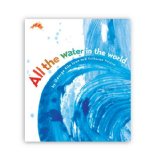
All the Water In the World written by George Ella Lyon and Katherine Tillotson
Picture book about water, the water cycle, and water conservation published by Atheneum Books for Young Readers | Simon and Schuster

All the Water In the World playfully and joyfully celebrates water and the water cycle. The first line explains,
“All the water in the world… is all the water in the world.“
Young readers will know that water sometimes blasts from hoses and collects in puddles but there is much more to the story of water. A breezy, lyrical introduction to the water cycle, All the Water In the World explains that water goes around.
That rain that cascaded from clouds and meandered down mountains and wavered over waterfalls then slipped into rivers and opened into oceans, that rain has been here before.
Positively delicious descriptive words celebrate water, water vapour, clouds and rain, and remind us that we must not take rain and the water cycle for granted; in some dry, dusty places, people must wait and hope for rain.
Beautiful illustrations match the tempo of the text and feature expressive bold colours that blast, splash, drip and gush across the page.
All the Water in the World at Amazon.com
All the Water in the World at Amazon.ca
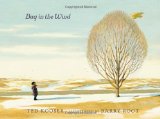
Bag in the Wind written by Ted Kooser and illustrated by Barry Root
Picture book about recycling, reusing resources, social responsibility published by Candlewick Press

Best suited to children in elementary school, Bag in the Wind is a thought-provoking story about an empty plastic bag. Although still usable, it has been discarded. It is subsequently unearthed at a landfill and is blown back into a world of plants, animals and people.
Beautifully written and illustrated, Bag in the Wind is a picture book that will challenge older readers to think about ways to reuse resources and be eco friendly.
Bag in the Wind at Amazon.com
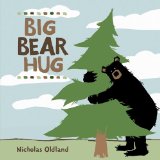
Big Bear Hug written and illustrated by Nicholas Oldland
Picture book about appreciating the outdoors published by Kids Can Press

Author – illustrator Nicholas Oldland introduces a happy, affectionate bear who shares his love by wandering through forests and hugging flora and fauna, large and small. One day the bear is shocked to find a man with an ax in the forest. The man is planning to chop the one of the oldest trees in the woods. Despite his anger, the bear gives the shocked man an enormous “bear” hug. This simply told fable features bold illustrations and a loving message. Big Bear Hug will be thoroughly enjoyed by children three and up.
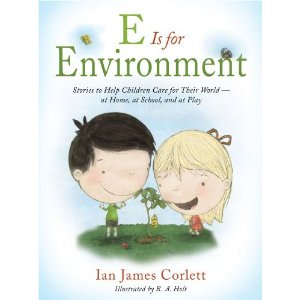
E is for Environment – Stories to Help children Care for Their World – at Home, at School, and at Play
Written by Ian James Corlett and Illustrated by R.A. “Riley” Holt
Story book about the environment published by Atria Books an imprint of Simon and Schuster

Featuring a friendly, conversational tone, E Is for Environment: Stories to Help Children Care for Their World provides a wealth of useful information for children and families.
After hearing a presentation by Matt Hill and Steph Tait of Run for 1 Planet at their school, Elliott and Lucy are inspired to find all sorts of ways to take action to “green” their world.
Twenty-six chapters (four pages each) cover everything from carpooling to soccer games and wearing a sweater rather than turning the thermostat up to packing a litterless lunch and choosing green, eco-friendly gifts.
Each chapter begins with a scenario that suggests an opportunity for Lucy and Elliott to make a change. Readers are encouraged to answer a question, “What do you think Elliot’s new plan was?” and then read to see if their guesses are correct. Additional supporting information is provided, and more questions prompt readers to consider how they can apply Elliott and Lucy’s decisions to their own lives. Thought-provoking quotes enhance most of the chapters.
- When Elliott decides to use rechargeable batteries in his favourite toy robot, we learn that rechargeable batteries have up to 28 times less impact on the environment than regular (alkaline) batteries and rechargeable batteries can be reused up to 1,000 times.
- When the family decides to walk to the post office rather than drive, we learn that Thomas Jefferson remarked, “Of all exercises walking is the best.” and Stephen Wright said, “Anywhere is walking distance, if you have the time.”
In addition to being an inspiring resource for families, E is for Environment is ideal for primary classroom use. Reading one chapter aloud each week could be used to prompt on-going discussions and action including encouraging young researchers to explore the science behind the book.
E Is for Environment: Stories to Help Children Care for Their World at Amazon.com
E Is for Environment: Stories to Help Children Care for Their World at Amazon.ca
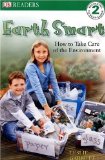
Earth Smart How to Take Care of the Environment – written by Leslie Garrett
Early Reader about recycling, waste reduction, conserving energy, pollution published by Dorling Kindersley

Part of Dorling Kindersley’s DK Readers series, Earth Smart is appropriate for children aged 7 to 9. Generously illustrated with photographs, it is rated “Level 2, Beginning to Read Alone.” Introducing ways we can help to look after the environment, content touches on recycling, a look at a landfill, disposing of toxic substances, reducing energy consumption, dangers of pollution and global warming, the benefits of enjoying eco friendly local produce and ways trees help us.
Leslie Garrett’s Blog The Virtuous Consumer
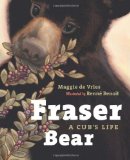
Fraser Bear – A Cub’s Life – written by Maggie de Vries and illustrated by Renne Benoit
Picture book about an ecosystem, life cycle of a salmon, life cycle of a bear published by Greystone Books

Weaving together the story of a young black bear cub with that of chinook salmon, Fraser Bear: A Cub’s Life is both informative and engaging. The story begins in January when two sleepy young bear cubs seek nourishment from their mother. Many miles away, chinook salmon begin their journey from the Aleutian Islands to Fraser Bear’s birthplace in the Rocky Mountains. We watch as the young bear grows and matures, experiencing the snowy forest for the first time, seeking food, meeting an angry male bear, enjoying tasty blueberries and discovering a river filled with spawning salmon.
“One day, the mother leads her cubs to the river’s rocky shore. Fraser stares. the water is alive! it squirms. It wriggles, Fraser has never seen water like this before.”
Brimming with factual information, Fraser Bear is beautifully illustrated and will be enjoyed by youngsters aged five and up. Additional notes provide information about black bears and bear safety as well as chinook salmon. A glossary and map also support the text.
Fraser Bear: A Cub’s Life at Amazon.com
George Saves the World by Lunchtime
Written by Jo Readman and illustrated by Ley Honor Roberts
Picture book about recycling, reusing and reducing waste published by Random House

Wearing a makeshift superhero cape, George announces his plans for the day, “I’m going to save the world!” Grandpa and his sister are willing to help and it is not long before the trio is finding ways to reduce, reuse, repair and recycle. Large, colourful collage illustrations include photos and drawings. Readers learn about reducing electrical consumption by hanging laundry to dry, minimizing fuel consumption by walking or riding a bicycle and the importance of turning lights off. Suggestions are also made for recycling, donating, repairing and buying locally produced eco-friendly items.
This book was inspired by The Eden Project an educational charity in Cornwall, England. It is worth noting that a sidebar refers to most electrical energy being produced by burning coal. This may or may not be true, depending on where the book is read. In addition, a suggestion is made that animal waste can be added to compost. This suggestion should have included the proviso that the compost ought not to be used for fruit or vegetable crops.
Cheerfully making suggestions without sounding preachy or extreme, George Saves the World by Lunchtime will be a positive addition to an eco-friendly (preschool or kindergarten) classroom or a home library.
George Saves the World by Lunchtime at Amazon.com
George Saves the World By Lunchtime at Amazon.ca
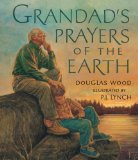
Grandad’s Prayers of the Earth written by Douglas Wood and illustrated by P.J. Lynch
Picture book about appreciating the natural world, prayer and death published by Candlewick Press

This beautiful, award-winning book is a tribute to the natural world, the special relationship between a boy and his grandfather and the comfort of prayer. While on a forest walk together, a young boy asks his grandfather about prayer. His grandfather pauses and then encourages the boy to look at the natural beauty around him and observe carefully, “These are all ways to pray, ” said Grandad, “but there are more…The tall grass prays as it waves its arms beneath the sky, and flowers pray as they breathe their sweetness into the air.”
A moving tribute to the love between a child and his grandparent, Grandad’s Prayers of the Earth is a book that can be enjoyed on many levels. Best suited to children five and up.
Grandad’s Prayers of the Earth at Amazon.com
Grandad’s Prayers of the Earth at Amazon.ca
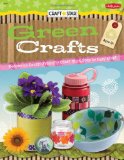
Green Crafts – written by Megan Friday
Instruction book for making eco- friendly crafts published by Walter Foster

Bright and cheery, Green Crafts is generously illustrated with photographs and drawings. It includes introductory remarks, information about tools and materials, project templates and sixteen projects ranging from decorating a canvas tote bag (with paint or fabric) to working with eco friendly reusable water bottles, gift bags and picture frames. As well, there are ideas for designing and decorating t-shirts, working with used blue jeans fabric, making a special gift for Earth Day, creating lightswitch plates with eco-friendly messages and using a decoupage technique to decorate a glass bowl. The crafts will be enjoyed by children aged eight and up.
Craft Star: Green Crafts at Amazon.com
Craft Star: Green Crafts at Amazon.ca
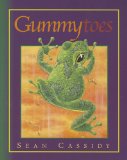
Gummytoes – written and illustrated by Sean Cassidy
Picture book about respecting wildlife and urban wildlife published by Fitzhenry and Whiteside Limited

Gummytoes is a tree frog who can change the colour of his skin and leap great distances. He longs to be admired so he steps into the limelight and amazes the neighbourhood children with his antics. The squealing youngsters respond by grabbing him and putting him into their terrarium. Before long Gummytoes discovers that being the centre of attention is not all he had hoped. He is lucky. He is able to use his special qualities to escape and make his way home.
This is a story that will encourage readers to consider the impact of capturing creatures for display. In addition to entertaining youngsters, Gummytoes provides factual information about gray tree frogs. The book could be used to prompt discussions about animals that use camouflage, nocturnal animals, natural habitats of tree frogs and wild creatures living in urban areas.
Suitable for children aged 4-8
Gummytoes was shortlisted for the 2006 Syrca Shining Willow ( in the Best Picture Book category) and the 2005 OLA Blue Spruce (also in the Best Picture Book category). It was also a Canadian Children’s Book Centre Our Choice selection in 2005.
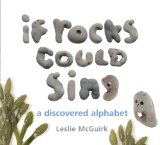
If Rocks Could Sing written and illustrated by Leslie McGuirk
Picture book about the alphabet and treasures found on the beach published by Tricycle Press – The Crown Publishing Group Random House

If Rocks Could Sing: A Discovered Alphabet shows us treats that many of us could completely overlook when exploring a shoreline. Ms. McGuirk is an avid observer and, over many years, has amassed an exciting collection. She has gathered together all sorts of eye-catching and intriguing rocks. She has one for every letter of the alphabet as well as a bird, a couch potato, a dog, an elephant…
Young children will thoroughly enjoy exploring If Rocks Could Sing and are certain to want their own collection of intriguing rocks. Share this with children aged three and up and you’re sure to be setting off on your own quest for rocks that sing.
If Rocks Could Sing: A Discovered Alphabet at Amazon.com

If Rocks Could Sing: A Discovered Alphabet at Amazon.ca
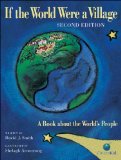
If the World Were a Village – A Book about the World’s People
written by David J. Smith and illustrated by Shelagh Armstrong
Picture book about the Earth’s people published by Kids Can Press

Imagine you lived in a village of one hundred people and that the village represented our entire planet. “Five of the villagers would be from Canada and the United States, three villagers would speak Russian, seventy-six would have electricity and thirty-two would breath polluted air.” Part of the Citizen Kid series of books, If the World Were a Village does a marvellous job of making difficult concepts easy-to-understand and helping young readers to become mindful and appreciative of the diverse world community.
Two page spreads explore the world’s nationalities, languages, ages, religions, food, air and water, school and work, money and possessions, energy, and health. The author’s straightforward approach enlightens and is supported with detailed endnotes. Bright, bold and detailed illustrations beg readers to pause, explore and understand the wealth of factual information represented.
A valuable resource for children five and up.
Kids Can Press Teaching guide for If the World Were a Village
If the World Were a Village – Second Edition at Amazon.com
If the World Were a Village – Second Edition at Amazon.ca
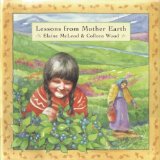
Lessons from Mother Earth written by Elaine McLeod and illustrated by Colleen Wood
Picture book about respecting nature and growing food published by House of Anansi Press Inc. | Groundwood Books

Lessons from Mother Earth tells the story of a young girl who learns from her grandmother. They leave a small cabin and, with her grandmother’s guidance, the young girl discovers the bounty of fresh food provided by Mother Earth. Lamb’s-quarters, raspberries, blueberries, cranberries, rosehips, dandelions and mushrooms are all part of the bounty.
Appropriate for children aged four and up
Lessons from Mother Earth at Amazon.com
Lessons From Mother Earth at Amazon.ca
One World written and illustrated by Michael Foreman
Picture book about the environment published by Andersen Press Co.

“She thought of all the creatures who lived under the sky, the animals who shared the warmth of the sun and bathed in the soft, silver light of the moon.”
After taking time to consider the diversity of animals on earth, a young girl visits a beach along with her brother. Together, they explore a wondrous tidal pool, filled with seaweed, small fish, sea anenomes, starfish. Unfortunately, it is not long before the children discover that the pool has been marred by a rusty tin can and a blob of oil. As the day at the seashore progresses, the youngsters fill a bucket with water, they add sand, pebbles, seaweed and shells before deciding to catch some tiny, live creatures. With their small sandpail marine habitat complete, the children revisit the rock pool and discover that it is no longer beautiful; the discarded, rusty can and the oil are all that remain. Startled at what they see, the children set about returning the sand, pebbles, seaweed, shells and fish to the pool. They remove the tin can and draw the oil out of the water using a seabird feather. Satisfied with the progress they’ve made, they decide to enlist the help of other children when checking the tidal pools the following day.
Beautiful illustrations and “not-too-much text” make this a lovely read aloud for children aged four and up. This is a picture book that begs readers to discuss not only the story but also the illustrations as Foreman gently depicts deforestation, air pollution and the threat of global warming.
Doha College curriculum tie-in for One World
Wendy North’s ideas for using One World in a classroom
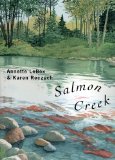
Salmon Creek written by Annette LeBox and illustrated by Karen Reczuch
Picture book about ecosystems and the life cycle published by Groundwood Books

A wonderful resource for children interested in our natural world and students studying Pacific salmon, Salmon Creek is a beautifully illustrated picture book about one Coho salmon: Sumi. Beginning when Sumi first feels and hears the creek around her, “Sumi was blind, but she could hear the wind whispering through the cedars. She could hear the creek stones lifting and falling as the salmon mothers built their nests. And if she pressed against the curve of her egg, she could hear her salmon mother singing. Home is the scent of cedar and creek. Home is the journey’s end.” Richly detailed illustrations show us the wildlife that frequents the banks of the stream (bears, raccoons, heron, ducks and eagles) and Sumi’s growth and travels from alevin to fry, smolt and finally a fully grown fish, ready to spawn.
The afterward includes illustrations of and information about the life cycle of the Coho salmon, a commentary regarding threats to wild salmon, additional resources, a glossary and suggestions for how kids can help.
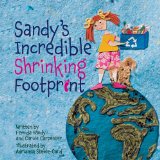
Sandy’s Incredible Shrinking Footprint
Picture book about one’s ecological footprint published by Second Story Press

Sandy’s Incredible Shrinking Footprint tells the story of a young girl who, while visiting her grandpa, happily runs to a nearby beach. She loves to explore the seashore and is shocked to find a pile of garbage others left near a fire pit. She is disgusted by the waste and works to collect the candy wrappers, pop cans and mustard bottles. Before long, she meets an old woman who roams the beach and collects the litter others have left behind. The woman encourages the girl to consider, “The footprint of your life – the mark you leave on the world.”
This breezy, empowering picture book includes colourful collage illustrations made from natural and recycled materials. Suitable for children aged six and up.
Sandy’s Incredible Shrinking Footprint at Amazon.com
Sandy’s Incredible Shrinking Footprint at Amazon.ca
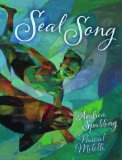
Seal Song written by Andrea Spalding and illustrated by Pascal Milelli
Published by Orca Book Publishers

In folklore, selkies are mythological creatures that can change shape. Selkies live in the ocean as seals and on land as humans.
Each morning Finn helps his father fish but he is secretly anxious for the opportunity to slip away from the wharf and the cannery. He wants to swim with the seals.
“Sing to me.” said Finn. “Sing the seal song that brings good fortune.”
The seal blew a fish breath and disappeared below the waves. But, despite Finn’s pleas, he does not hear the seals sing.
One afternoon, while enjoying his usual swim with seals, Finn notices a commotion in the waves, his favourite seal has been caught in an old fishing net. Finn dives into the ocean, rescues the seal, feeds it and nurses it back to health. He has made a new friend. Finally his wish is granted; he hears the seals sing.
Father is not happy with Finn and does not believe that a seal song will bring good fortune. He is suspicious when a mysterious child appears near the wharf. The other fishermen warn, “That child will never let saltwater touch her skin. If it does, she must return to the sea.”
Sheila becomes a good friend to Finn but she does not swim in the ocean with him nor does she allow saltwater to touch her skin. Meanwhile, the salmon fishing is good, Finn and his father are especially lucky and the old fishermen attribute their good fortune to Finn’s new friend.
Richly illustrated with beautiful, evocative oil paintings, Seal Song is a thought-provoking look at what it means to be a friend.
For older children, Seal Song could lead to an exploration of folklore, shapeshifting, friendship, sacrifice, social responsibility and/or salmon fishing.
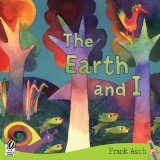
The Earth and I – written and illustrated by Frank Asch
Picture book about the environment

Suitable for very young children, The Earth and I explores the relationship between a young boy and the world around him. We observe the boy viewing a rainstorm, celebrating a rainbow, playing with dirt and water in his backyard, going for a walk, raking leaves, planting seeds and eating fresh produce. “I sing for her. She sings for me. I dance for her. She dances for me.” When the boy discovers garbage littering a park, he clears away the garbage, plants a flower and embraces a tree.
An important eco-friendly message expressed simply, The Earth and I is well-suited to a preschool read-aloud setting. As well, distinctive watercolour illustrations could serve as inspiration for young artists.
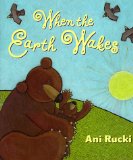
When the Earth Wakes – written and illustrated by Ani Rucki
Picture book about the seasons

A lovely book for very young children, When the Earth Wakes invites readers to observe as spring arrives, the earth is awakened and a mother bear stretches with her young cub. We watch the snowmelt and the two bears frolic in the sunshine and warm breeze. Before long it is summertime; butterflies, salmon, thunderstorms and starry nights change the natural landscape once again. When leaves begin to change and blueberries ripen, the two bears know it is time to prepare for winter. A lovely, gentle circular story about the changing seasons and our beautiful earth.
Striking coloured pencil illustrations make When the Earth Wakes well-suited to a read-aloud setting.
When the Earth Wakes at Amazon.com
When the Earth Wakes at Amazon.ca
Winston of Churchill – One Bear’s Battle Against Global Warming written by Jean Davies Okimoto and illustrated by Jeremiah Trammell
Picture book about global warming published by Sasquatch Books

The town of Churchill, Manitoba describes itself as the “Polar Bear Capital of the World. Tours to see polar bears are offered from early October until the middle of November and use special vehicles to cross the tundra.
In Winston of Churchill: One Bear’s Battle Against Global Warming we meet a rather unique polar bear. Winston is fearless and powerful. When he calls his compatriots together, they listen intently to his warning, “The ice is melting. We are losing our home. The time has come for action. This is no time for ease and comfort. It is the time to dare and endure.” Winston urges the bears to fight for ice. “We shall fight on the landing grounds. We shall fight in the fields and in the streets. We shall fight on the hills. We shall never surrender.”
Delivering a positive message that many individuals, making small changes can have an impact on global warming. Winston of Churchill is a very enjoyable read aloud. Clever wordplay and illustrations will be thoroughly enjoyed by adults as well as children.
Winston of Churchill: One Bear’s Battle Against Global Warming at Amazon.com
Winston Of Churchill: One Bear’s Battle Against Global Warming at Amazon.ca
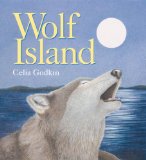
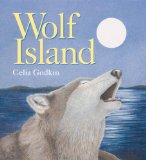
Wolf Island written and illustrated by Celia Godkin
Picture book about wolves, seasons and ecosystems published by Fitzhenry and Whiteside Limited
Picture book about an ecosystem published by Fitzhenry and Whiteside Limited

In Wolf Island author-illustrator Celia Godkin has created a sensitive, fictional exploration of the importance of biodiversity, the relationship between predator and prey, and the complex relationships within an ecosystem.
Wolf Island is home to many plant and animal species including a family of wolves. The island ecosystem functions well until a log raft drifts near the shoreline. Curious wolf cubs climb onto the raft and are soon floating away from the small island. Frantic howls draw the adult wolves to the raft and, moments later, the wolves are all aboard the raft. With the departure of the wolves, the island’s natural balance has been disrupted.
As the seasons pass, the wolves’ absence begins to be felt. An abundance of deer produces more fawns would otherwise be on the island so more grass and leaves are consumed. With less vegetation available, the rabbit, fox, mouse and owl populations are each impacted in turn. Soon many animals experience hunger and suffering. A difficult winter causes hardship but produces an ice bridge from the mainland to the island and the emaciated wolves are able to return home to their territory.
Well-suited to late primary grades, Wolf Island is an excellent introduction to biodiversity and offers many possibilities for further discussion and exploration.
Detailed Teachers’ Guide including page-by-page commentary, topics for discussion and a glossary
Related post:
When the Earth Wakes follows Mother Bear and her cub through a year
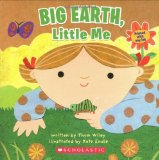 Big Earth, Little Me Shares A Green Message for Preschoolers
Encourage Very Young Children to Love Our Earth with this Picture Book
Earth Smart How to Take Care of the Environment is great for grade 2
Big Earth, Little Me Shares A Green Message for Preschoolers
Encourage Very Young Children to Love Our Earth with this Picture Book
Earth Smart How to Take Care of the Environment is great for grade 2
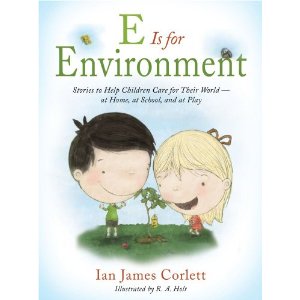 E is for Environment by Ian James Corlett