Posts Tagged ‘teacher resource’

Thank you for being a Member of the Storytime Standouts Community

Posted on April 20th, 2012 by Carolyn - Storytime Standouts

We hope you will enjoy our free early literacy printables and that you will check out our articles about terrific new children’s books and how children learn to read.
 
We regularly add new material to the site and we are proud to say that we offer more than two hundred free printables as well as hundreds of posts about special children’s books.

Once you become a member of this site, if you are having a problem signing in or downloading materials, please don’t hesitate to contact us directly, by email. Please use the email link on the website.
 
We hope you will enjoy StorytimeStandouts.com and we are especially grateful for referrals. Please let your friends and family know about the website.
 
Thank you and Happy Reading!
 
Carolyn Hart
 
Storytime Standouts
Raising Children Who Love to Read


For a very limited time, we have made most of our
~ Gardening with Children printables ~
available to all visitors to the site - with no membership required.
We sincerely hope you will “share this site” with your friends and colleagues.
Wishing you Happy Gardening!


Free Alphabets

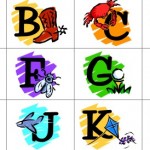
Storytime Standouts offers a variety of free alphabets in PDF format for children in preschool, kindergarten and the early primary grades. We have grouped the alphabets together and you will find all of the free alphabets here. We suggest using the alphabets to make matching games, help a child to learn alphabetical order and/or letter sounds or decorate a bulletin board.


Interlined (Printing) Paper

Storytime Standouts offers free interlined paper for children, visit our Interlined Paper page to see the entire collection. We hope you will use the interlined paper to inspire young writers.

We have tried to match seasonal themes and the sort of topics a kindergarten or grade one child might write about. We regularly add interlined paper to the website. We try to anticipate a child’s interests and classroom themes.

If you would like to suggest another theme, please contact us using the email link.


Preschool and Kindergarten Songs, Rhymes, Chants and Fingerplays

Use these songs, rhymes, chants and fingerplays with children in preschool, kindergarten and early primary grades. We have grouped them together on our Songs, Rhymes, Chants and Fingerplays page. We regularly add new songs, rhymes and chants to the website. We try to anticipate your interests and classroom themes.

If you would like to suggest a song, rhyme or fingerplay, please contact us using the email link.


Word Family Printables

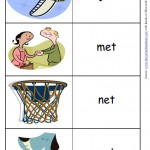
These word family printables are great for children who are learning to read. We have grouped them together on our Word Family page.

For a beginning reader, discovering that cot, dot, hot, pot and rot are related is exciting. Children who are just learning to sound out words will be thrilled to learn that they can substitute the beginning sound and read three, four or more related words. We view word families as a great springboard for beginning readers.


Picture Dictionaries – Words for Beginning Readers and Writers

Helpful for beginning readers and writers, these picture dictionaries are all together on our Words for Beginning Readers and Writers page. We know young children get a great sense of satisfaction from using pictures to help them decode words. With these picture dictionaries, they can read a series of related words or they use the words to write a story.


Reading for Reward

Posted on March 21st, 2012 by Jody

Whether it’s reading, math, science, or socials, there is conflict over rewarding children for meeting goals and expectations in the classroom. If we reward them with tangible “prizes”, do we diminish their intrinsic motivation? An argument can be made either way. We need, and kids need, to understand intrinsic motivation. Not every accomplishment deserves a prize, just like not every misstep deserves a consequence.

I think that we can create a balance in the classroom that reinforces intrinsic motivation but allows for concrete rewards as well. Let’s be honest: we all like rewards; take out on Fridays, a trip to Starbucks, a special purchase. So while we need kids to know and understand that reading in and of itself is a reward, I’m okay with giving a little more every now and then. At my school, we do Accelerated Reading which allows kids to read books at their level then take a test to check their comprehension. Each book is worth a certain amount of points (harder book = higher points) and your points are based on how well you do answering questions about the book. The teachers at our school take various approaches when deciding how to utilize those points as motivation. I have seen (and borrowed) some incredibly creative ideas. Depending on the grade level, the teacher, and the goal, kids have earned computer time, tours of the office and staff room, buddy time, time with the principal, lunch with the teacher, and a host of other special rewards.

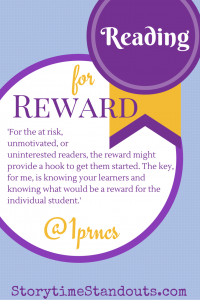
So does this add to or diminish the academic and personal reasons for reading? In my experience, it adds to both. Students who are academically motivated already, will enjoy the extra rewards and bonuses that come from doing something they were going to do anyway. For the at risk, unmotivated, or uninterested readers, the reward might provide a hook to get them started. The key, for me, is knowing your learners and knowing what would be a reward for the individual student. It might not be a prize from the ‘prize bin’ or an extra ten minutes on the computer, but if you can know your students, you can find what their motivation is and use it to help them move forward.

I’ve noticed that once you start a ‘system’ with students, they become attached to the routine as much as anything else. In my class, every AR point goes up on a chart. From there, every 5 points gets a sticker and every 5 stickers receives a prize, which could be a new pencil, sharpener, eraser or bookmark. Most kids are going to meet these goals anyway, so the ‘prize’ is just a little bonus for effort, time, and achievement. The students are very particular about the routine, even at the grade 4/5 level. They put their AR quizzes in the folder, remind me to tally points, let me know when they’ve reached personal and/or class goals. Recently, my class walked to the store as a reward for achieving the class goal of reaching over 500 AR points. Every student in the class contributed to that goal. It didn’t matter by how much, but it mattered that together we worked towards it and together, we celebrated it.

I can teach without giving rewards. I can implement curriculum and engage my students without giving them prizes or anything more than verbal praise. The 21st century learning goal is to motivate and engage all learners. I like to think that I can meet this goal without the bonus incentives. If my objective is to do just that, to motivate and engage without incentives, then, for me, offering the incentives only enhances the experiences and the enjoyment for my learners.

Happy New Year…here’s to starting over with middle grade readers

Posted on January 9th, 2012 by Jody


Guest contributor Jody looks at welcoming middle grade readers back to school in January.

I ended 2011 in the middle or near the end of too many projects. It’s always a dilmena to me; do I start fresh, trying to re-engergize and engage the kids all over, or do I carry on from where we left off and show them the value and necessity in finishing what we start?

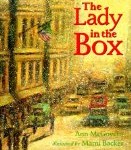
I did a little of both. When holidays started, I had only read 1/3 of a book called Lady in a Box, by Ann McGovern. It ties in so nicely to the holiday season, giving, and caring for others. It’s a great way to connect the kids to the outside world and to learn a number of powerful strategies in reading and writing. I was also reading Lemonade War, by Jacqueline Davies, as my read aloud. As well, the students were each in 1 of 5 reading groups, which were not going well. In addition to all of this, we were reading an assortment of Christmas picture books because the kids were creating their own children’s stories.

It’s difficult to walk away from some things, but on the other hand, if the students aren’t getting enough out of it, or if the teaching is not having the effect you thought it would, sometimes it’s better to cut and run. So, I fast tracked Lady in A Box because the story is worthwhile and the message applies to life in general and not just a season. One down. I took the kids out of their reading groups because it was not going at all the way I planned and it was putting some of the kids off reading. Two down. I also gave up on Lemonade War because we have been talking about this book since September and many of the kids had read it. Three down. Then, I had to re-evaluate what it is I want and need the kids to know and decide how to help them get there. Eliminating the first two things was the first step.

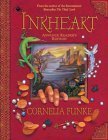
The second step was to revitalize and re-energize the students. January is a new year, a fresh start, and in many ways, another September. We have to re-teach and review routines and expectations and we have to “hook” them again. I needed something that would immediately draw them in and help me re-work my book club as well. I found and started Inkheart by Cornelia Funke. I’m going to have to do a whole post dedicated just to Inkheart because it’s so good. For now though, I won’t go into too much detail about the novel. Just let me say that it has given my new year a definite push in the right direction.

The kids are are hooked on the novel (some have read it but are being awesome and not giving any information away). They’re settling into routine quicker because in order to squeeze in a whole chapter each day, I have to start the read aloud right after recess. In addition to this, they’re already, in just four days, becoming more proficient at recognizing and asking lower level questions. What a great start to 2012 in the classroom!!
So, while I was sorry to put Lemonade War aside because I hate to leave things unfinished, I think it’s important to recognize when we need to do just that. Some things just don’t work the way you want them to. Part of learning and being successful, for us and for the students, is knowing when you need to step back and try another route. Sometimes giving up one thing in favor of spending your time and energy on something else is a better way to achieve your goal. For me, I gave up Lemonade War to allow for time to read Inkheart. I gave up my small book club groups to do whole group instruction, which is turning out way better.

So, whether it’s giving up on something, trading off, or trying a completely different approach, the important thing is to keep the end in mind. In the end, I want students to be engaged in what we are reading, to be thoughtful writers, and to know that when something just isn’t working, it’s okay to try a different tactic. We learn by doing. Sometimes what we learn, is that we have to start over. Happy New Year.

The Lady in the Box at Amazon.com

The Lady in the Box at Amazon.ca

Inkheart at Amazon.com

Inkheart at Amazon.ca

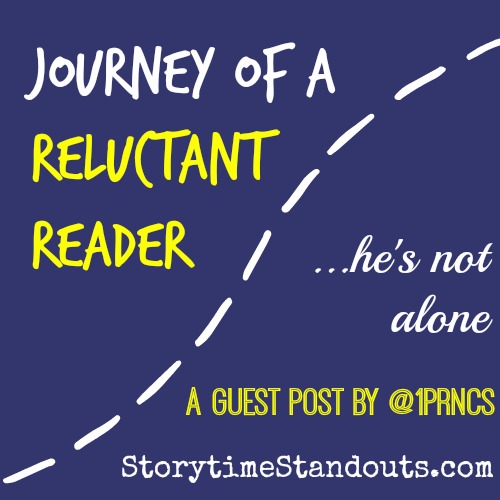
Journey of a Reluctant Reader…he’s not alone

Posted on November 1st, 2011 by Jody

I chose a different approach this year when I found an openly reluctant reader. Normally, I would try to get to know the student, figure out their interests, ask for suggestions from the librarian or do some online research about popular books. This year, instead of approaching my goal of changing Johnny’s mind about reading alone, I’ve included the entire class in the process. Establishing a strong classroom community is essential for academic, social, and behavioral success. By enlisting my class in the goal to change Johnny’s mind, we’ve become stronger as a group. Last week I mentioned that other students were now recommending books for him. While this sense of community and caring for others is exactly what I want in my classroom, I also want to be sure that the students, including Johnny, understand the importance of making that shift from being a reluctant reader to being an avid reader or at least having an open mind and a willingness to try.

Noticing the way the students laugh when Johnny makes comments about not reading, I also want to be sure that this journey doesn’t become a form of amusement. One other concern I’m beginning to have is that the other students, particularly the other less than enthusiastic readers, may use this as an opportunity to blend into the background. If I’m focused on showing the class that Johnny’s mind can be changed, then I might not make a big deal, or even notice, that others are practicing avoidance. So far, I’m hoping this isn’t the case.

Any teacher knows that all students are different and thus, require a different approach. So while it may be entertaining, powerful, and even successful to allow Johnny’s reading journey to be public, I am quietly aware of the other journeys taking place. I wonder if these students notice the subtle push I hope that I am giving when I offer or suggest books in the library or the classroom. Does the classroom awareness of our reluctant reader’s journey make these others want to read more or less or have any impact at all? Are there ingredients I’m missing to help push the others forward in their own journeys? Is knowing their reading level and interests enough? What about those students who want to read more but struggle?

I’m still working on answers to some of these questions. What I do hope, is that those students who aren’t having their journeys made public, recognize that I’m aware of their academic needs as well. I’m hoping that the students are getting the right message from my decision to talk more publicly about Johnny’s journey. That message is that every journey is different and my goal as a teacher is to help each student find the tools and confidence to make their own journey successful and hopefully, enjoyable.

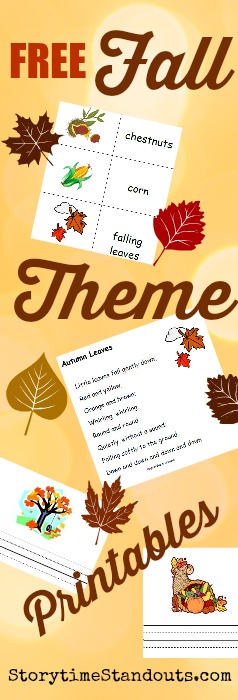
Free Fall Printables – We’ve Got Treats for You!

Posted on October 23rd, 2011 by Carolyn - Storytime Standouts

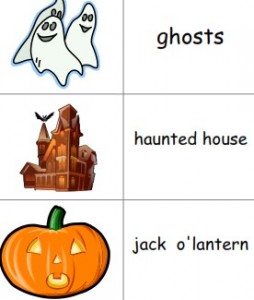
We love pulling together free printables for young learners to enjoy. We have many free early literacy printables and hope you will check them out. Young children love our colourful interlined paper and, those who are just starting to read and write will have fun with our Halloween picture dictionary.

  Interlined Paper - Thanksgiving Cornucopia
Please become a member of Storytime Standouts to download this file.

  Thanksgiving Day Crossword Puzzle
Please become a member of Storytime Standouts to download this file.

  Thanksgiving Word Search
Please become a member of Storytime Standouts to download this file.

For teachers, we have Five Little Ghosts and Five Little Pumpkins – these rhymes are perfect for circle time. You can easily make a felt board story with spooky ghosts or bright orange pumpkins

Halloween Circle Time -

  Halloween Circle Time - Five Little Ghosts
Please become a member of Storytime Standouts to download this file.

  Halloween Circle Time - Five Little Pumpkins
Please become a member of Storytime Standouts to download this file.

For children, our free Halloween printables include words together with pictures (print and use like a picture dictionary) as well as pumpkin and witch interlined paper.

Reading and Writing about Halloween –

  Halloween Picture Dictionary
Please become a member of Storytime Standouts to download this file.

Halloween Interlined Paper -

  Interlined Paper - Witch Hat
Please become a member of Storytime Standouts to download this file.

  Interlined Paper - Pumpkin
Please become a member of Storytime Standouts to download this file.


For older children, we have a Halloween Crossword Puzzle and a Halloween Wordsearch

Halloween Crossword Puzzle

  Halloween Crossword Puzzle
Please become a member of Storytime Standouts to download this file.

Halloween Word Search

  Halloween Word Search
Please become a member of Storytime Standouts to download this file.

Remembrance Day

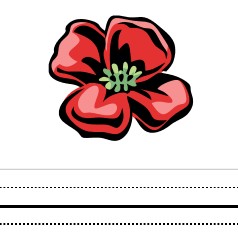
  Interlined Paper - Remembrance Day Poppy
Please become a member of Storytime Standouts to download this file.


Follow these links for lots more interlined paper, rhymes and words together with pictures.

Our early literacy printables, including our free Halloween printables are in PDF format, if you don’t already use Adobe Reader, you will need to use it to access the downloads.


Please note: some of our early literacy printables are available to Storytime Standouts members only. To become a member of the website (without cost or obligation), please click on the “Members” tab and register as a user.

Halloween Picture Books at Amazon.com

Halloween Picture Books at Amazon.ca


If you appreciate our free early literacy printables,
including these Fall, Halloween and Thanksgiving early learning materials,
please support this site by visiting and purchasing from Amazon.com or Amazon.ca
.


Making words powerful

Posted on October 22nd, 2011 by Jody

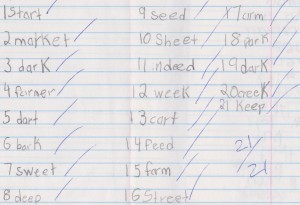
When I was in elementary school, spelling programs were a large part of our Language Arts lessons each week. On Mondays, we would do a pretest, mark it, correct it, and write out each of the words. In the next few days, we would complete numerous activities, including writing each word in a sentence, doing the dictionary definitions, perhaps a crossword, and filling in the blanks using the correct word. On Fridays, we had our test. It was on long, skinny, full scap paper. The next week, we would begin the entire process again with new words. I’m not certain that any of us could necessarily spell these words correctly from then on, but we definitely knew them for Friday’s test.

For the past several years, I’ve avoided this traditional type of program. I believe it has valuable components, such as understanding the meaning of words, being able to use it in the right context, and improving our ability to learn how the word is created between the pre and post tests. What I worry about though, is whether there is a  connection between learning how to spell in this fashion and improving your oral, written, and reading vocabulary. Does rote memorization of word lists truly impact a child’s reading and writing? I think the answer is both yes and no.

What I do believe, is that there is a connection between a child`s understanding of how words are made up and their ability to decode, read, and comprehend. I am a big fan of the activities that come along with Word Work and think they are important to retaining vowel sounds, word chunks, understanding of syllables, and knowledge of prefixes and suffixes. I use the term Word Work, both here and at school, in place of the word Spelling. It is more than spelling a word correctly that I am after.

Powerful readers make connections and I think that students need to connect the words they are learning to what they are reading and writing. While many spelling programs offer word lists that compliment the curriculum, I think that the important feature is that the activities that students engage in must help them further understand the word. They need to be able to see and understand the letters, sounds, parts, and the whole. They need to understand it in context and out. They need to recognize small pieces of words so they can identify sound patterns. This means going beyond rote memorization of word lists.

Having said that, in the early grades, memorization of Sight Words (they may be called Dolch, Primer, No Excuse, or Red words) is a building block to reading success. These words don’t conform to the conventions that we teach. Using rote memorization in combination with “spelling” and writing activities is a great way to reinforce these unconventional words that are such a huge part of our oral and written vocabulary.

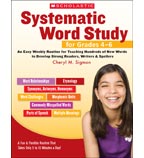
As we move up through the grades and try to move toward reading for understanding, the students need to extend and strengthen these skills. Programs such as Rewards, Words Their Way, or Making Words are great ways to get students to extend and strengthen their word recognition abilities. I have been using a new book that I recently purchased from Scholastic, called Systematic Word Study. It’s a sequential, daily word program that highlights prefixes, suffixes, meaning, parts, antonymns, and syllables. The more kids understand how to break these words apart, categorize them, put them back together, or see them in different ways, the better chance we have at them transfering this recognition to their writing and reading. The best part of this program is that it is fun. It’s got really great activities, such as building mystery words using parts of other words, that the kids get really involved in. The activities are short, specific, and powerful.

So while I don’t think that the spelling programs of my youth are what we need to boost strugging and proficient learners, I do recognize the value in Word Work. The more connections and transfer skills that we can arm our students with, the greater chance they have for success in all curricular areas.

Systematic Word Study for Grades 4-6: An Easy Weekly Routine for Teaching Hundreds of New Words to Develop Strong Readers, Writers, and Spellers at Amazon.com

Systematic Word Study For Grades 4-6 at Amazon.ca


Beyond Bedtime Stories – Early Literacy Can Include So Much More Than Just Reading Aloud

Posted on October 21st, 2011 by Carolyn - Storytime Standouts

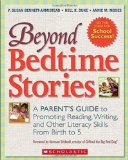
Beyond Bedtime Stories by V. Susan Bennett-Armistead, Nell K. Duke and Annie M. Moses

Beyond Bedtime Stories is a very thorough exploration of ways parents can promote early literacy with young children. The authors address dozens of important questions like “What if a book contains words or ideas that I find offensive?” and “Should I teach my child to read before kindergarten?” Beyond Bedtime Stories also includes suggestions of ways to fill your home with books even if you are on a budget, how to improve comprehension and ways to promote literacy inside and outside your home.

This is a very worthwhile resource for young families, daycare and preschool settings.

Beyond Bedtime Stories: A Parent’s Guide to Promoting Reading, Writing, and Other Literacy Skills from Birth to 5

Beyond Bedtime Stories : A Parent’s Guide to Promoting Reading, Writing, and Other Literacy Skills from Birth to 5 at Amazon.ca


Have you filled a bucket today?

Posted on October 9th, 2011 by Jody

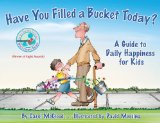
Have You Filled a Bucket Today? by Carol McCloud is a story that offers children a creative way to recognize the impact we all have on each other. Based on Dr. Donald Clifton’s “How Full is Your Bucket?”, McCloud’s book allows younger audiences a bright and colorful way to understand a unique metaphor. The book explains that each of us has an invisible bucket. When the bucket is full, we feel happy and good about ourselves. When our bucket is empty, we feel sad. People can be “bucket dippers” or “bucket fillers”. What I liked about this part is that she explains that when you fill someone’s bucket, by being kind or thoughtful, you also add to your own bucket. Likewise, if you dip in someone’s bucket, by being unkind or hurtful, you are dipping in your own bucket as well. I think that’s a powerful way to explain to children that being mean or unfair to others does not make you feel good about yourself but being kind to others does. The language is simple and straightforward, making it understandable for even preschool children. Though I think the illustrations are more suitable for younger students, the theme is one that is especially powerful for students of all ages.

Children need to be taught behavior and social expectations along with everything else. Sometimes we take it for granted that they might already know that their actions affect others. In the past couple of weeks, I’ve had a few incidents where some students have spoken quite harshly to other students. When I’ve asked, “why are you speaking to them like that?” the response has been “I don’t know”. Their first response is to react to others with whatever emotion they are feeling at that moment. Offering the suggestion, “try telling them like this…” allows students the opportunity to learn how they can express themselves without hurting someone else. And while this direct instruction is still going to be necessary, establishing a classroom language based on a book such as McCloud’s, is a simple way to weave the concept of more positive interactions into your classroom community.


How we treat others is how we are treated in return. We need this lesson to resonate with our children and with our students. We need them to understand that regardless of how well you do on a test or how high your reading level is, without the ability to interact positively with others, you are at a disadvantage. To be honest, it’s not a bad lesson to impart to adults either. It’s just as easy to offer a kind word as a negative one. The difference is, the domino effect of kindness makes us feel better about ourselves and the world around us.

McCloud also has the books Fill a Bucket and Growing up with a Bucket Full of Happiness.

Have You Filled a Bucket Today? at Amazon.com

Have You Filled a Bucket Today? at Amazon.ca


More News

Storytime Standouts Offers Many Early Literacy Printables


Today's Most Popular Early Literacy Printables

Environmental Awareness

Earth Day Printables for Children

Earth Day Printables For Children Promote Environmental Awareness

Storytime Standouts' Earth Day Printables Help Children Learn About the ...

All the Water In the World by George Ella Lyon and Katherine Tillotson

All the Water In the World written by George Ella ...

Seal Song written by Andrea Spalding and illustrated by Pascal Milelli

Seal Song written by Andrea Spalding and illustrated by Pascal ...

Helping Children Learn the Alphabet

Paul Thurlby Aphabet K

Paul Thurlby’s Alphabet

Storytime Standouts looks at a stylish alphabet book, Paul Thurlby's ...

Eggstra, Eggstra – Matching Upper and Lower Case Letters

Children enjoy matching upper and lower case letters with this ...

b d confusion, is it a “b” or a “d”? Helping young readers decide

I made a presentation last night to a preschool parent ...

Supporting Phonemic Awareness

Bolstering Phonemic Awareness, Getting Ready to Read While in the Car

Bolstering Phonemic Awareness, Getting Ready to Read While in the Car

Some of the keys to learning to read are noticing ...

Developing Phonemic Awareness: How’s Your Nose, Rose?

At a Parent Ed program (I call 'Ready for Reading') ...

Phonemic Awareness – Questions for Your Child (2)

The focus of our last few posts has been phonemic ...

HyperSmash.com